Start with the dining application
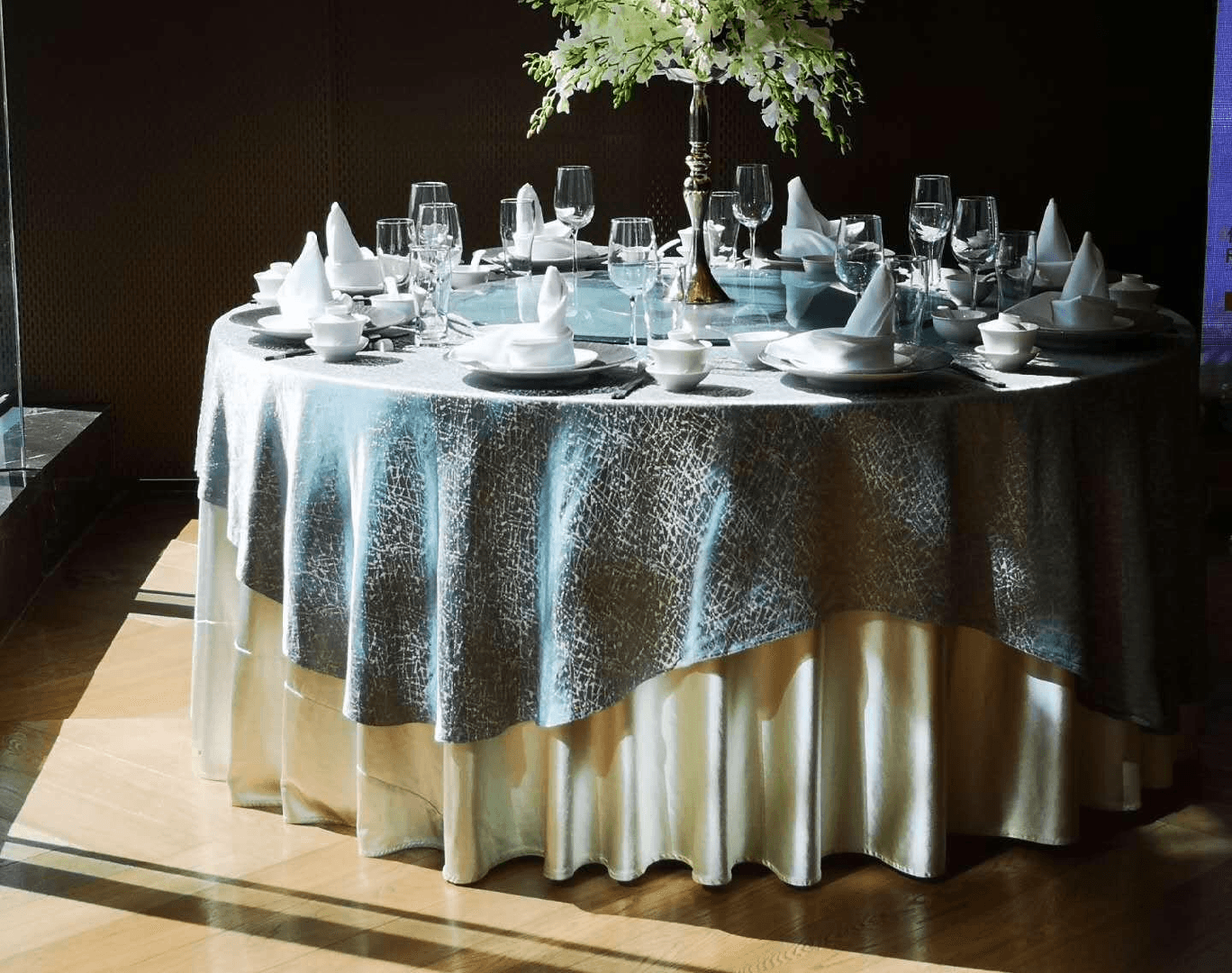
F&B linen is used across different service settings. A banquet setup, Chinese dining room, all-day restaurant and room-service operation may call for different product combinations, table shapes, presentation and handling. Organize the brief by venue or service first, then list the required items within each group.
- Banquets and events: record each table shape and size, required coverage, tablecloths, napkins, chair covers or sashes, and any stage or table skirting.
- Chinese dining: note round tables, any Lazy Susan or table-cover requirements, coordinated napkins and the intended table presentation.
- Restaurants and all-day dining: identify the table types, service periods, color direction, cloth and napkin combinations, and replenishment needs.
- Meetings and conferences: list meeting-table dimensions, fitted or loose-cover requirements, skirting and the number of room layouts.
- Room service: identify trolley or tray dimensions and any linen pieces required for the operating setup.
These are planning categories, not claims that every property needs every item. Confirm the actual scope with the hotel team.
Build a specification for each product
Use one line per product and specification. If two venues use different sizes, materials, colors or finishes, record them separately even when the product name is the same. For tablecloth measurements and drop calculations, see the hotel tablecloth size guide.
| Brief field | What to record | Why it helps |
|---|---|---|
| Application | Banquet or event, Chinese dining, all-day dining, meeting, cocktail service or room service | Identify the venue and service conditions for each specification. |
| Product | Tablecloth, napkin, chair cover or sash, placemat, coaster, table cover or skirting | List each item separately; coordinated products may need separate specifications. |
| Dimensions and fit | Table shape and top dimensions; finished item dimensions; intended drop or coverage | Use measured furniture and the desired presentation. Do not assume a universal hotel size. |
| Material and construction | Fiber direction, weave or texture, color, pattern, edge finish and any fitted construction | Record the selected direction and any details that still need a sample or project review. |
| Branding and design | Embroidery, logo, jacquard, print, placement, artwork version and color reference | Confirm approved artwork and placement before sample approval. |
| Quantity and timing | Quantity by product, size, venue, opening or operating stock, destination and required date | Separate opening needs from replenishment needs; commercial terms are confirmed per project. |
| Care and approval | Known laundry process, sample review, dimensional checks and agreed acceptance points | Review the physical sample in context and agree how it will be assessed after laundering. |
| Repeat orders | Approved reference sample, specification version, item code and future replacement needs | Keep the approved details together so later orders can be compared consistently. |
Material availability and suitability depend on the selected product and project. Describe the requirement or reference sample rather than assuming that a material, finish or performance is available across every category.
Use this procurement checklist
- Group requirements by venue, dining concept or service area.
- List tablecloths, napkins and supporting products as separate items.
- Measure furniture and record dimensions with units; describe the desired cloth drop or coverage.
- Specify material direction, color, construction and edge finish, marking open decisions clearly.
- Attach or identify approved artwork and describe branding placement where needed.
- Break quantities down by item, size, venue and delivery phase.
- Describe the known laundry process and the sample review required before production.
- Keep the approved specification and sample reference for repeat or replacement orders.
Plan samples and laundry review
Review a physical sample against the intended table setting, including the tablecloth, napkin, tableware and lighting where practical. Confirm which characteristics are represented by the sample and what still needs agreement. If commercial laundering is relevant, agree the process with the laundry operator and decide what to inspect after the trial; do not assume a universal wash temperature, tolerance or acceptance threshold.
For napkins, use the hotel napkin sample approval guide to organize composition, finished size, color, edge construction and laundry review.
Prepare a clear F&B linen inquiry
A quotation request is easier to review when it includes the dining application, item list, dimensions, material and design direction, quantities, destination and timing. You can explore the ZIHUI table-linen collection and factory and quality information while preparing the brief.
If some details are not decided, mark them as open questions instead of guessing. The project team can then review the scope and identify which points need measurement, sample approval or commercial confirmation.